Basic First Aid Skills for Outdoor Adventures: A Scout’s Guide
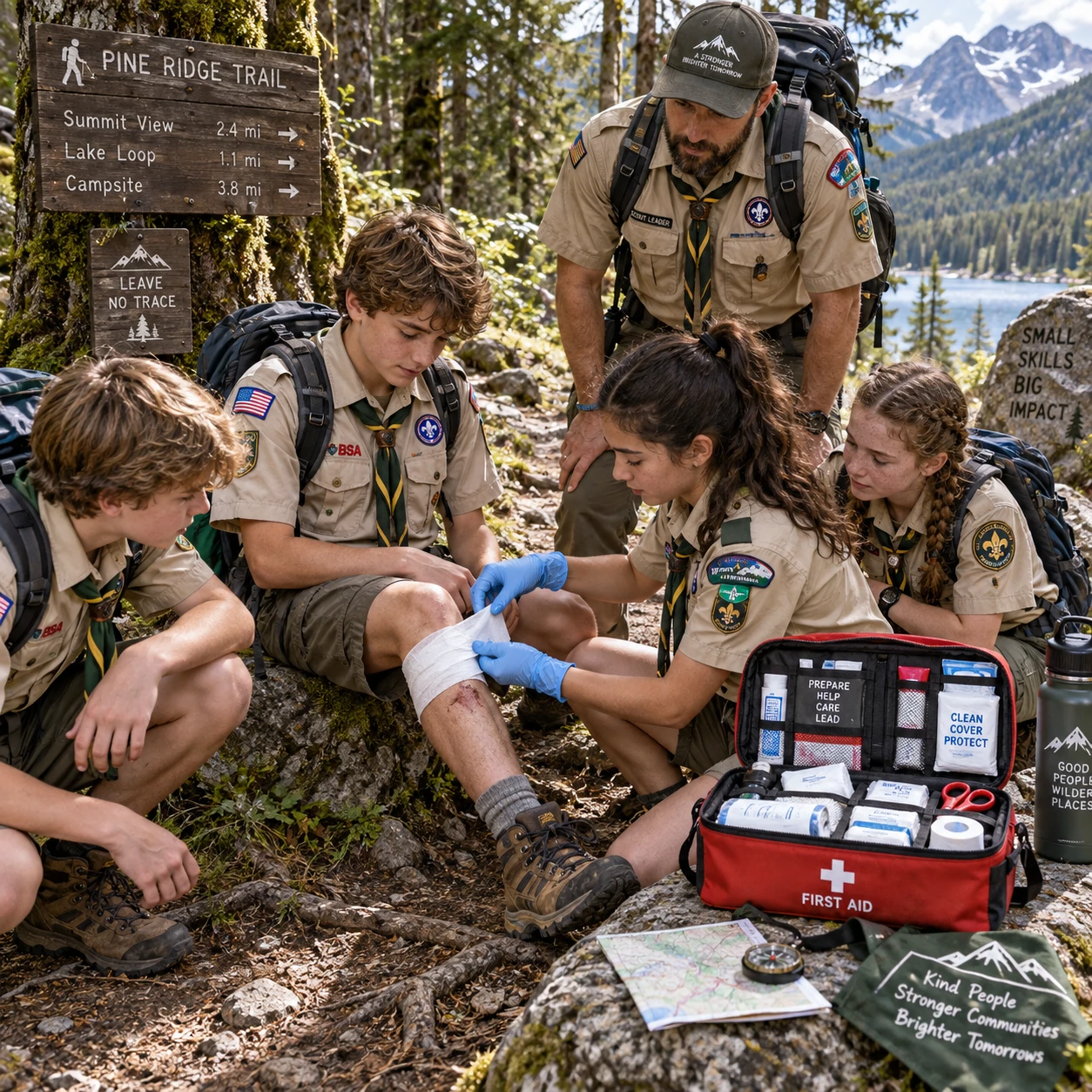
A scraped knee or a sudden change in weather can turn a fun hike into a moment that calls for calm, practical action. Scouts can learn to protect themselves, give simple first aid within their training, and get help quickly when an injury or illness is serious.
These skills support, but do not replace, certified first aid training or a troop’s emergency action plan. Follow your leader’s instructions and local procedures, and never put yourself in danger to help someone else.
Start with scene safety and getting help
Before helping an injured person, check that the scene is safe, then alert a troop leader and assess what help is needed. A calm first response protects the scout who is hurt and the people trying to help.
Look for immediate hazards such as traffic, unstable rocks, fire, falling branches, fast-moving water, or severe weather. Do not enter an unsafe area. Move only if staying put presents a greater danger, and do so with an adult’s direction when possible.
Once the area is safe, approach calmly and ask the person what happened and how they feel. Avoid moving someone who may have a serious injury unless there is an immediate threat. Ask another scout to alert the leader and bring the first aid kit. If the situation may be life-threatening, have someone contact emergency services using the local emergency number and share the location, what happened, and the person’s condition.
Use the troop’s emergency action plan: know who leads, how to contact help where there is limited phone service, and where the group will meet responders. Stay with the person, keep the rest of the group together, and give clear updates. If you have first aid training, act within it; otherwise, follow the leader’s directions and avoid guessing.
Handle cuts, scrapes, and blisters
For minor cuts and scrapes, wash your hands if possible, rinse the wound with clean water, cover it with a sterile dressing, and tell an adult. For blisters, reduce friction and protect the area rather than trying to tough it out.
Use clean water to gently remove dirt from a small wound. Apply light, steady pressure with clean gauze or a dressing if it is bleeding. Once bleeding is controlled, cover the area with a bandage. A scout should get adult help for a deep or dirty wound, an object embedded in the skin, bleeding that does not stop, or signs of infection later. Do not remove an embedded object or use unapproved substances on a wound.
Blisters often start as a hot spot where a sock or shoe rubs. Pause, dry the area, and cover it with a blister dressing or moleskin if available and the scout knows how to use it. Do not pop a blister in the field unless directed by a qualified adult following appropriate training. If walking is painful, tell the leader; continuing can worsen the injury.
Prevention begins before the trail: wear broken-in, well-fitting footwear and moisture-managing socks, keep feet dry when practical, and adjust laces if rubbing begins. A quick buddy check at breaks can catch hot spots early.
Respond to sprains, strains, and suspected fractures
For a suspected sprain, strain, or fracture, stop the activity, keep the person comfortable, and limit movement while an adult arranges appropriate help. Do not test the injured limb or try to straighten a bone.
Sprains affect ligaments around a joint, while strains involve muscles or tendons, but scouts should not try to diagnose the difference outdoors. Pain, swelling, bruising, difficulty using a limb, or an unusual shape all call for adult attention. If a fracture is possible, treat it as serious and avoid moving the person unless the location itself is dangerous.
Help the person rest in a position that feels comfortable. Support the injured area in place with clothing or a soft item if needed, without forcing it into a new position. A wrapped cold pack may help with swelling when available; do not put ice directly on skin. The leader should decide whether to contact emergency services or arrange a safe evacuation based on the injury, terrain, and the group’s plan.
Trying to walk off a significant injury can make it worse and complicate evacuation. Keep the person warm, monitor how they feel, and follow trained adult guidance while waiting for help.
Recognize heat illness and cold exposure
Heat illness and hypothermia need prompt adult attention: stop the activity, move to a safer environment, and get help. Confusion, fainting, severe weakness, or a worsening condition should be treated as an emergency.
Heat exhaustion can develop during exertion, especially in hot or humid weather. Warning signs may include heavy sweating, weakness, headache, nausea, dizziness, or cramps. Tell a leader right away. Move the person to shade or a cooler area, loosen unnecessary outer layers, and have them rest. Offer small sips of water only if they are alert and able to drink safely. If symptoms are severe, worsen, or do not improve promptly, contact emergency services. Do not give a drink to someone who is confused, unconscious, or unable to swallow safely.
Hypothermia can happen in cold, wet, or windy conditions, even when temperatures do not seem extreme. Shivering, clumsiness, unusual tiredness, and confusion are warning signs. Get the person out of wind and wet clothing when possible, insulate them with dry layers or blankets, and alert a leader immediately. Severe symptoms require emergency services. Handle the person gently and follow the emergency action plan.
Both conditions can become serious faster than expected. Scouts should report symptoms early rather than waiting for a person to decide they are fine.
Build and use a scout-friendly first aid kit
A scout-friendly first aid kit carries basic supplies for minor problems and helps the group respond while adults arrange further care. The right kit depends on group size, trip length, location, and leader training.
For a day hike, a compact kit may include:
- Adhesive bandages in several sizes and sterile gauze pads
- Medical tape, a triangular bandage, and blister dressings or moleskin
- Disposable gloves and antiseptic wipes
- Small scissors, tweezers, and a compact emergency blanket
- Any personal medication the scout is responsible for carrying, according to family and troop rules
A kit is useful only if supplies are clean, dry, in date where applicable, and easy to find. Check it before each outing, replace used items, and make sure a leader knows what is inside. Scouts should use supplies only within their training and should not share personal medication or give medicines to others unless a responsible adult and applicable rules allow it.
Do not overpack a small personal kit with items you do not know how to use. A manageable kit, paired with training and a communication plan, is safer than a large collection of unfamiliar equipment.
Prevent problems on hikes and campouts
Scouts can prevent many outdoor injuries by matching the pace and equipment to the group, drinking regularly, dressing for changing conditions, and speaking up early when something feels wrong. Good preparation lowers risk, though it cannot remove every hazard.
Before departure, check the route, forecast, daylight, and expected conditions with a leader. Wear suitable footwear and layers, pack water and food as directed, and know the group’s turnaround time. On the trail, keep a steady pace with breaks; rushing increases fatigue and the chance of trips or poor decisions.
Use buddy checks at stops to notice blisters, overheating, cold hands, or a scout falling behind. Drink according to the conditions and your leader’s guidance, and do not wait until you feel unwell to mention a problem. At camp, follow fire and tool safety rules, keep paths clear, and report hazards promptly.
Preparation works best as a shared habit. Each scout should know who the leader is, how to call for help, and where the first aid kit is kept, while adults retain responsibility for managing serious incidents.
Frequently asked questions
What should scouts do first when someone is injured?
Check for hazards before approaching, then alert a troop leader. Keep the group safe, stay with the injured person, and follow the emergency action plan.
What should a hiking first aid kit include?
A basic kit can include bandages, gauze, medical tape, gloves, antiseptic wipes, blister dressings, and an emergency blanket. Leaders should tailor supplies to the outing and ensure someone knows how to use them.
When should you call emergency services?
Contact emergency services for a life-threatening problem, serious injury, severe heat illness or hypothermia, or any situation the troop cannot safely manage. Follow local procedures and give responders the group’s location and condition details.
Can scouts treat injuries without an adult?
Scouts may provide simple care within their training, but they should tell a leader promptly and should not manage serious injuries alone. Certified training and adult supervision matter, especially when symptoms are severe or uncertain.