Leave No Trace: Principles for Ethical Camping with Your Scout Troop
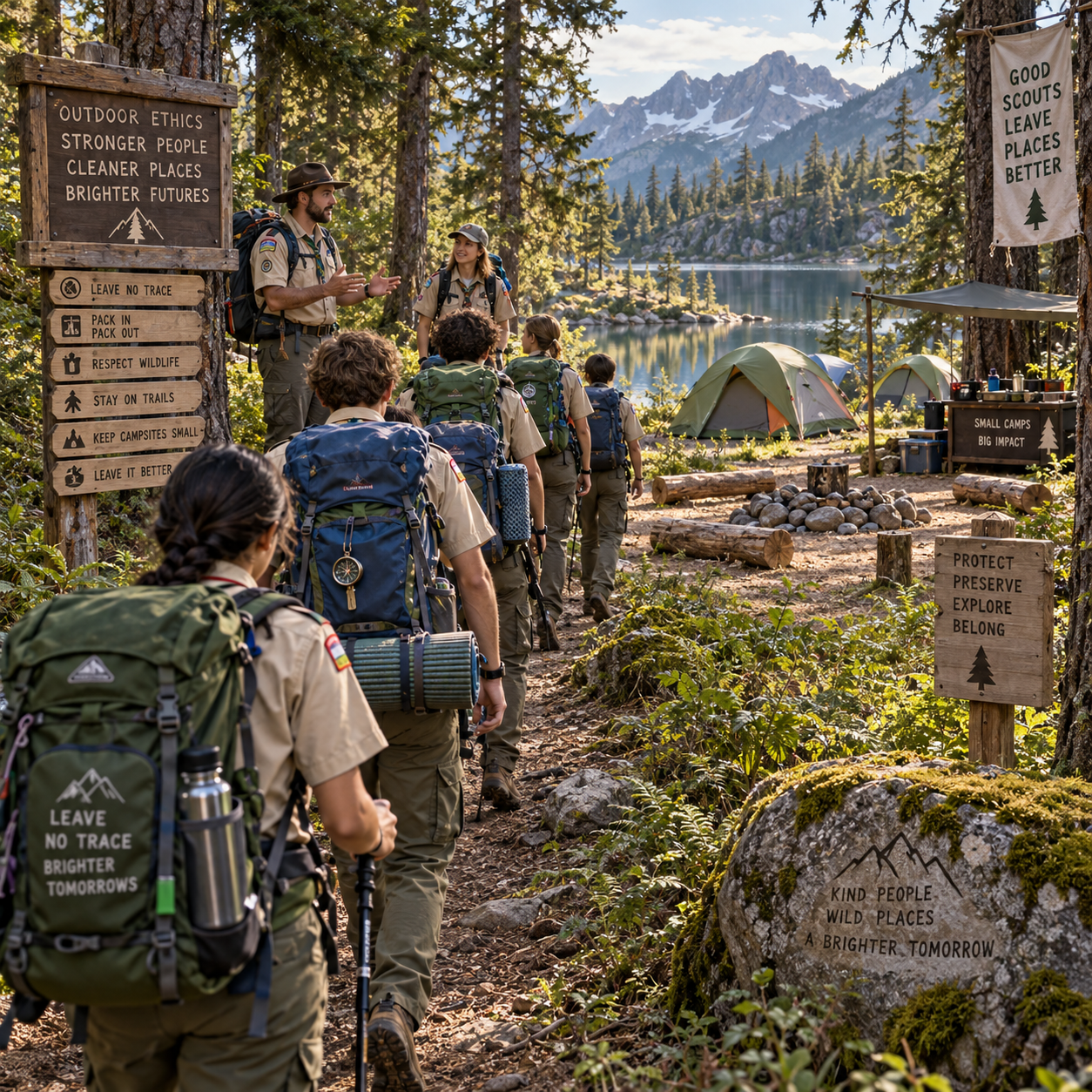
Leave No Trace gives scouts a practical framework for enjoying nature while protecting it. The seven Leave No Trace principles help a troop plan carefully, reduce damage, respect wildlife, and leave campsites ready for the next visitors.
Ethical camping is a shared responsibility. A single scout can pack out a wrapper, but a well-led troop can prevent dozens of problems through preparation, clear roles, and good decisions. These habits support Scouting’s commitment to service, responsibility, and environmental stewardship.
Why Leave No Trace Matters for Scouts
Leave No Trace matters for scouts because it protects natural areas, improves outing safety, and develops responsible leaders. Ethical camping teaches young people to consider how their choices affect soil, water, wildlife, other visitors, and future trips.
Troop camping creates a larger footprint than an individual overnight trip. Tents, cooking areas, group games, food storage, and travel routes can quickly damage vegetation or disturb other campers. The Leave No Trace approach helps scouts manage that impact before it becomes a problem.
Use the principles as a decision-making tool rather than a list to memorize. Before an action, ask:
- Will this damage a living surface or natural feature?
- Could it attract or disturb wildlife?
- Will another visitor have to deal with the result?
- Can the troop choose a lower-impact alternative?
Assign practical leadership jobs, such as a waste-check patrol, fire-safety lead, campsite inspector, and quiet-hours coordinator. Rotating these responsibilities gives scouts ownership and turns outdoor ethics into visible troop behavior.
Plan Ahead and Prepare
To plan ahead and prepare, learn the route, weather, rules, campsite conditions, and group needs before leaving. Good preparation prevents emergencies and reduces unnecessary equipment, waste, and environmental impact.
Start with current information from the land manager, park authority, or property owner. Check trail conditions, water availability, camping restrictions, fire rules, wildlife notices, permits, group-size limits, and seasonal closures. Regulations vary by location, so the troop should confirm them before every trip rather than relying on an old checklist.
Match the route to the youngest or least experienced scout. Build in daylight for arrival, time for meals, weather delays, and a realistic emergency plan. Leaders should carry communication equipment, first-aid supplies, navigation tools, and contact details according to troop policy.
Equipment planning also affects low-impact camping. Choose reusable containers, durable food bags, repair supplies, and clothing suited to the forecast. Measure meals before departure so the troop carries less packaging and avoids large amounts of leftover food. A short pre-trip briefing should cover wildlife, sanitation, water crossings, fire restrictions, and what to do if someone finds litter or a damaged campsite.
Preparation is prevention. A group that knows where to camp, how to store food, and whether fires are permitted will make fewer rushed decisions outdoors.
Travel and Camp on Durable Surfaces
To travel and camp on durable surfaces, stay on established trails when available and place tents, cooking areas, and gathering spaces on surfaces that can withstand use. This protects vegetation, soil structure, and fragile habitats from repeated troop activity.
On trails, walk in the center of the path even when it is muddy, unless local guidance says otherwise. Do not widen a trail by walking around puddles, and avoid creating shortcuts. In a group, keep scouts together and prevent side trips through plants or unstable ground.
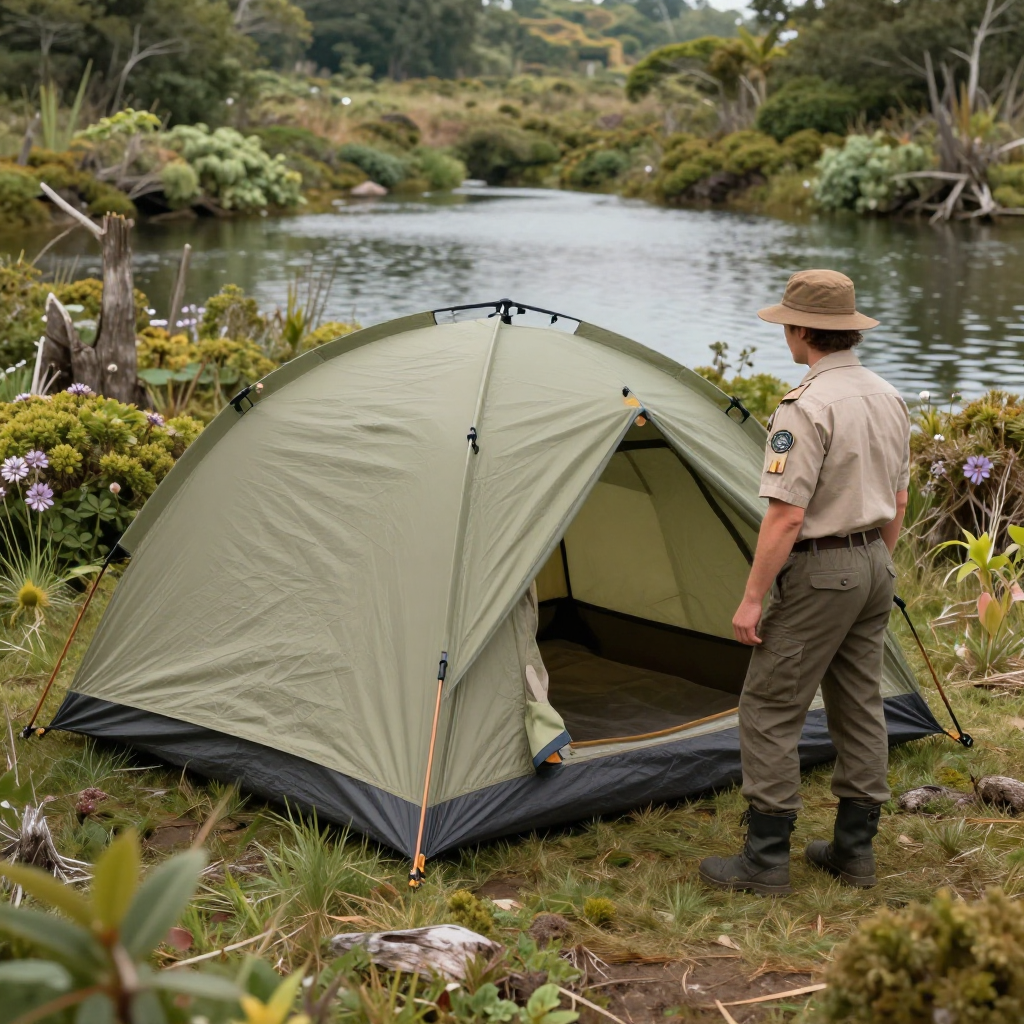
For campsite selection, use an existing designated site where regulations require or recommend one. Otherwise, look for a durable surface such as bare soil, rock, sand, gravel, or an established tent area. Avoid fragile vegetation, wet ground, stream edges, animal homes, and places where roots could be damaged by tents or foot traffic.
Large groups should spread necessary activities across suitable durable areas when that reduces pressure on one small spot. Keep tents, dining areas, and games organized instead of allowing scouts to create informal paths between them. At departure, remove temporary markers and restore the site only as local guidance recommends; excessive rearranging can cause more damage than leaving a naturally used surface undisturbed.
Dispose of Waste Properly
To dispose of waste properly, pack out all rubbish, manage human waste according to local rules, and keep food scraps and wash water away from natural water sources. The troop should leave the site cleaner and safer than it found it.
Use a simple waste system with separate bags for rubbish, recycling where facilities exist, food scraps, and wet or contaminated items. Every scout carries personal waste out, while the waste patrol conducts a final sweep under tents, tables, bushes, and around the fire area. Do not burn plastic, foil, cans, or food packaging; burning can leave toxic residue and unburned fragments.
For human waste, follow the land manager’s instructions. Where catholes are permitted, choose an appropriate location well away from water, campsites, trails, and areas used for cooking, then follow local depth and disposal guidance. Some environments require toilets, portable systems, or pack-out bags. Toilet paper and hygiene products should be handled exactly as local regulations require.
Wash dishes away from lakes, streams, and springs. Strain food particles, pack out the strained material, and scatter properly treated wash water only where permitted and away from water sources. Never pour greasy water into a stream or bury food scraps, because both actions can attract wildlife and contaminate water.
A useful troop rule is leave no trace of meals: no crumbs, grease, wrappers, or food odors remain when the cooking area closes.
Leave What You Find and Respect Wildlife
To leave what you find and respect wildlife, observe natural objects and animals without collecting, feeding, chasing, or disturbing them. Protecting nature means allowing it to remain part of the ecosystem for other visitors and future scouts.
Scouts may be tempted to take a stone, feather, plant, antler, or interesting piece of bark as a souvenir. In many places, collecting is restricted, and even small removals can affect habitats or spoil someone else’s discovery. Encourage sketches, notes, and photographs instead. Do not carve names into trees, move rocks unnecessarily, or build structures from natural materials.
Wildlife encounters require distance and calm behavior. Store food, rubbish, and scented items as required by local guidance. Never feed animals, surround them for photographs, or approach nests, dens, young animals, or injured wildlife. If an animal changes its behavior because of the troop, the group is too close.
Designate a wildlife observer during meals and evening activities. That scout can remind the group to secure food and report an encounter to a leader. Leaders should follow the relevant land manager’s instructions for bears, snakes, insects, marine animals, and other local species.
Wildlife respect is a safety practice as well as an ethical one. Keeping distance protects both animals and scouts from stressful or unpredictable encounters.
Minimize Campfire Impacts
To minimize campfire impacts, first confirm that fires are allowed and necessary, then use an existing fire ring or a safer alternative and extinguish the fire completely. Campfires are never automatically acceptable because rules, weather, fuel conditions, and local ecosystems change.
Check current fire restrictions before departure and again when conditions change. A stove often provides a cleaner, faster cooking option and reduces the need to gather or transport firewood. If a fire is permitted, use only the fuel and collection methods allowed by the land manager. Do not cut live trees, strip branches, or transport firewood across regions unless authorities specifically permit it.
Keep the fire small, supervised, and away from tents, vegetation, overhanging branches, and stored fuel. Use an established fire ring when available. Never leave a fire unattended, even briefly, and assign a fire-safety scout under adult supervision.
To extinguish a fire, stop adding fuel, pour water gradually, stir the ashes and coals, and continue until everything is cold to the touch. Do not assume that a fire is out because flames have disappeared. Pack out leftover charcoal if local guidance requires it, and never scatter hot coals or bury them.
Choosing a stove for routine cooking may sacrifice the social atmosphere of a fire, but it often improves efficiency and reduces ash, smoke, wood collection, and fire risk.
Be Considerate of Other Visitors
To be considerate of other visitors, control noise, share facilities fairly, respect quiet hours, and represent the troop with courtesy. A low-impact campsite should feel respectful to people as well as to the landscape.
Keep group games, singing, and conversations within the area’s expectations. Avoid amplified music, shouting across campsites, and unnecessary night-time movement. When passing hikers, yield according to trail rules, move safely as a group, and keep packs and equipment from blocking paths.
Large troop groups should plan how they will use shared toilets, water points, shelters, kitchens, and trailheads. Give other visitors reasonable access and avoid spreading equipment into communal spaces. If the troop makes a mistake, a prompt apology and correction often matters more than a defensive explanation.
Leaders can appoint a courtesy patrol to monitor volume, pathways, shared facilities, and interactions with nearby campers. Scouts learn that outdoor leadership includes representing their troop positively when nobody is formally watching.
Scout Troop Leave No Trace Checklist
Before leaving, a scout troop should inspect the campsite, remove waste, confirm that fires are cold, and check that natural features remain undisturbed. A final team review turns the seven Leave No Trace principles into a reliable departure habit.
- All rubbish, food scraps, and packaging are packed out.
- Dishes and wash water have been handled according to local guidance.
- Human waste has been managed using the approved method.
- Fire rings, ashes, and coals are cold and dealt with correctly.
- Food, rubbish, and scented items are secured or removed.
- No plants, rocks, feathers, wood, or other natural objects were collected.
- Tents and equipment have not left unnecessary damage.
- Trails, shared facilities, and neighboring campsites are clear.
- The troop has checked for dropped gear, micro-trash, and forgotten items.
Leave No Trace camping is environmental stewardship in action. When scouts plan carefully, travel thoughtfully, manage waste, respect wildlife, and lead by example, they protect the outdoors while building habits that extend beyond every campout.
Frequently Asked Questions
What is Leave No Trace camping?
Leave No Trace camping means using the outdoors in ways that prevent or minimize damage to land, water, wildlife, and other visitors. It is guided by seven principles covering preparation, travel, campsites, waste, natural objects, wildlife, fires, and courtesy.
What should scouts pack to reduce campsite waste?
Scouts should pack reusable water bottles, durable food containers, measured portions, repair supplies, and only the packaging they need. Avoid individually wrapped items when a safe reusable or bulk option works, while still following food-safety requirements.
How should a troop handle food and wildlife encounters?
Keep food and rubbish secured as local guidance requires, never feed animals, and observe wildlife from a safe distance. If an animal approaches, stay calm, create space, and follow the instructions of the land manager or trained adult leaders.
Are campfires always allowed when camping?
No. Campfires depend on local regulations, weather, fire danger, season, campsite rules, and ecological conditions. Check current guidance before lighting any fire, and use a stove when a fire is prohibited, unnecessary, or likely to cause impact.
What should scouts do if they find litter at a campsite?
If it is safe, scouts can use gloves or a tool to collect the litter and place it in the troop’s waste bag. Do not handle sharp, hazardous, or unknown materials; report those items to an adult leader or the site manager.