Essential Knots Every Scout Should Master (and When to Use Them)
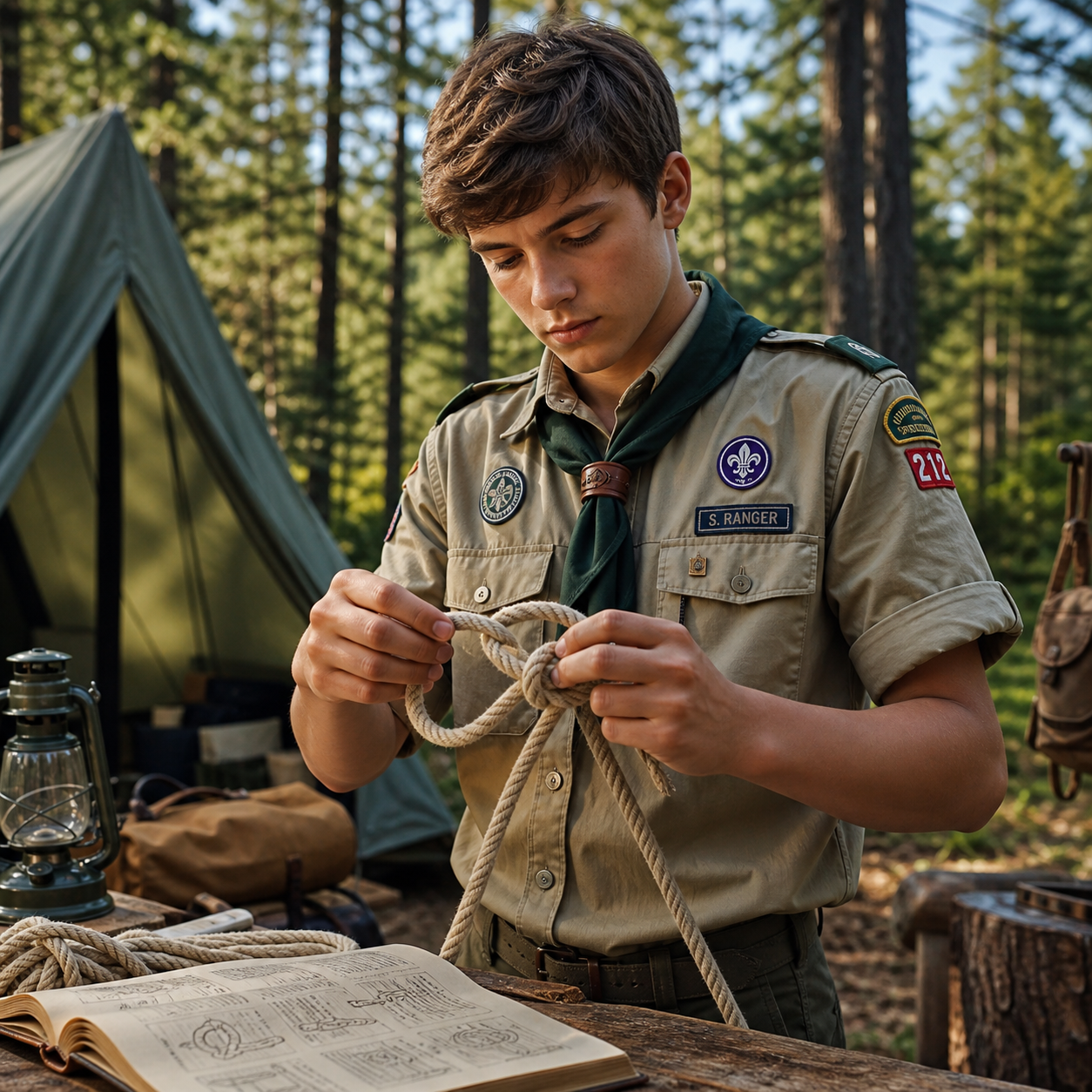
Rope skills have been part of scouting since Baden-Powell first published his handbook in 1908. And for good reason — a scout who can tie a reliable knot is a scout who can pitch a shelter in the rain, secure a load on a pack frame, or help in an emergency. Knots are one of those rare skills that feel like a game when you're learning them and prove genuinely useful for the rest of your life.
This guide covers the essential knots every scout should know, why each one earns its place, and how to actually remember them when it counts.
Why Knot Skills Are a Core Part of Scouting
Knot tying is foundational to scouting because it builds both practical competence and mental discipline. Every time a scout works through the steps of a bowline or a clove hitch, they're practicing patience, sequential thinking, and problem-solving under pressure — character skills that go well beyond camp.
On a purely practical level, cordage and rope are among the most versatile tools at any campsite. Shelter building, load securing, first aid, and rescue situations all depend on knowing which knot to reach for and being able to tie it correctly the first time. A knot that slips or jams at the wrong moment isn't just inconvenient — it can be dangerous.
Scout handbooks across organizations from the BSA to Scouts Canada consistently include knot proficiency as a core early skill, and for good reason. It's one of the few outdoor skills a scout can practice at home with nothing more than a short length of rope.
What Makes a Knot "Essential" for Scouts
An essential knot earns that label by being reliable, versatile, and genuinely useful in real outdoor situations — not just impressive to look at. The knots on this list meet three specific criteria.
- Reliability: The knot holds under load and doesn't slip or capsize unexpectedly. A knot that fails is worse than no knot at all.
- Versatility: It solves more than one problem. The best camp knots appear across multiple scenarios — shelter, gear, safety, and more.
- Learnability: A scout of 10 or 11 can master it with a few practice sessions. Knots that require years of muscle memory to tie correctly don't belong on a beginner's core list.
Obscure specialty knots have their place in advanced rope craft, but they're not what a new scout needs on their first camping trip. The six knots below pass all three tests.
The Essential Knots: A Scout's Core List
These six knots cover the vast majority of situations a scout will encounter in the field. Learn all six, and you're genuinely prepared for most camp and outdoor challenges.
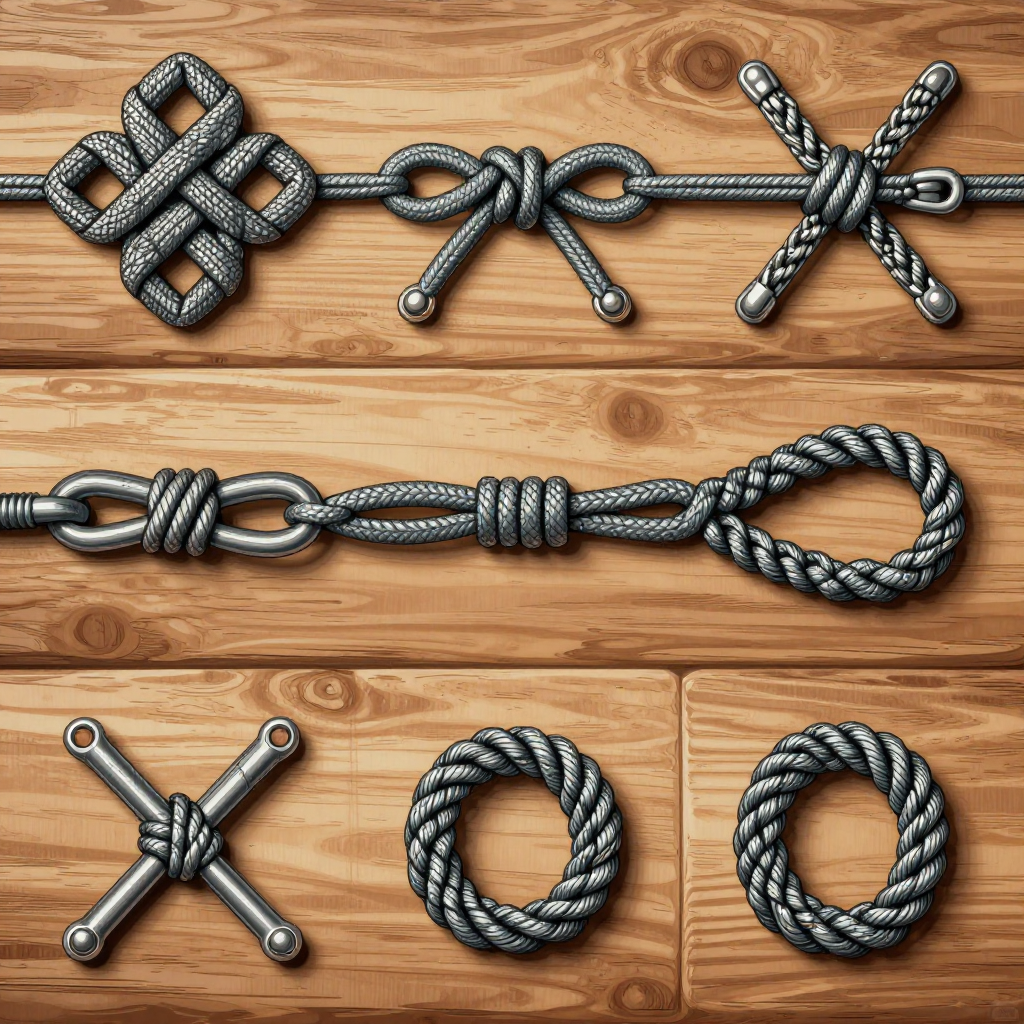
Square Knot (Reef Knot)
The square knot joins two ends of the same rope to bundle or secure a package. It's the knot most scouts learn first — "right over left, left over right" — and it's used everywhere from closing a first aid bandage to lashing gear to a pack. One important caveat: it's not reliable for joining two separate ropes under significant load. Use it for binding, not for life-safety connections.
Bowline
The bowline creates a fixed loop at the end of a rope that won't slip or tighten under load. It's often called the "king of knots" in scouting circles, and that reputation is earned. Use it to secure a rope around a tree, create a rescue loop, or anchor a tent line. The classic memory trick — "the rabbit comes out of the hole, around the tree, and back down the hole" — actually works, and most scouts remember it for life.
Clove Hitch
The clove hitch attaches a rope to a post, pole, or branch quickly. It's the go-to knot for starting and finishing lashings in camp construction, and it can be tied with one hand once practiced. It does loosen if the load direction changes frequently, so it's best used where tension stays consistent.
Sheet Bend
When you need to join two ropes of different thicknesses, the sheet bend is the right tool. It's more secure than a square knot for this purpose and holds well even when the ropes differ significantly in diameter. Scouts use it to extend a tent guy line, attach a rescue rope, or connect cordage of mismatched sizes.
Taut-Line Hitch
The taut-line hitch creates an adjustable loop that holds tension but can be slid along the rope to tighten or loosen. It's the standard knot for tent guy lines — pitch your tent, stake the line, and use a taut-line hitch to dial in exactly the right tension. No other knot on this list does that job as cleanly.
Figure-Eight Knot
The figure-eight knot is a reliable stopper knot that prevents a rope from pulling through a ring, pulley, or hole. It's easy to tie, easy to inspect visually, and easy to untie even after being loaded. Use it at the end of a rappel rope, on a pulley system, or anywhere you need a dependable end stop.
Practical Applications in Camp and the Outdoors
Knowing each knot individually is one thing. Knowing which knot to grab in a specific situation is the real skill — and that comes from understanding how these knots work together.
Consider a typical camp setup scenario. A scout pitching a tarp shelter might start lashings with a clove hitch on the ridgeline pole, run the tarp out with a bowline tied to a tree, and tension the guy lines using taut-line hitches on the stakes. Three knots, one shelter, all working together.
In a load-carrying situation — securing gear on a canoe or lashing equipment to a vehicle rack — the square knot handles bundling while the sheet bend extends any rope that's too short. The figure-eight acts as a failsafe stopper at critical points.
For rescue and safety applications, the bowline stands out. A fixed, non-tightening loop can be lowered to someone who needs to be pulled from water or a steep slope without the risk of the loop constricting around them. Scouts learning basic first aid and rescue techniques will encounter the bowline repeatedly in that context. The American Red Cross and similar organizations include rope-assisted rescue in their water safety curricula for exactly this reason.
Tips for Learning and Remembering Knots
The fastest way to learn knots is short, frequent practice — not long sessions. Five minutes a day beats one hour on the weekend.
A few approaches that actually work for scouts of different ages:
- Tie with your eyes closed. Once you can tie a knot without looking, you've genuinely learned it. This also prepares you for tying in low-light conditions at camp.
- Use a dedicated practice rope. Keep a short length of paracord in a pocket or backpack. Idle hands at a troop meeting are perfect practice time.
- Teach it to someone else. Explaining a knot out loud forces you to understand each step, not just muscle-memory your way through it. Younger scouts teaching each other is one of the most effective learning strategies in any troop setting.
- Learn the "why" alongside the "how." Scouts who understand why the bowline doesn't tighten under load remember the knot better than those who just memorize the steps.
Memory aids like rhymes and stories ("right over left, left over right" for the square knot; the rabbit story for the bowline) aren't childish — they're effective cognitive anchors that work for adults too.
Knots and Scout Advancement: Badges and Skills
Knot proficiency connects directly to scout advancement in most major scouting programs. Early rank requirements typically include demonstrating a set of basic knots, and merit badges in areas like camping, pioneering, and lifesaving all draw on rope skills.
The pioneering merit badge in the BSA, for example, builds extensively on the core knots covered here, extending into lashings and camp structures. A scout who has genuinely mastered the six essential knots will find those advanced requirements much more approachable. According to the Boy Scouts of America, pioneering skills are among the oldest in the scouting tradition — and knots are their foundation.
Beyond badges, knot competence builds the kind of quiet confidence that marks a reliable scout. Leaders notice the scout who can rig a tarp quickly in a rainstorm or tie a proper bowline without fumbling. That visible competence opens doors to leadership roles and patrol responsibilities.
Building on the Basics: What to Learn Next
Once the six essential knots are solid, scouts have a strong foundation for more advanced rope skills. Natural next steps include:
- Lashings (square lashing, diagonal lashing, shear lashing) for building camp structures and pioneering projects
- The trucker's hitch for creating mechanical advantage when tensioning a load
- The prusik knot for ascending a rope — useful in advanced outdoor and climbing contexts
- Whipping and seizing to prevent rope ends from fraying, which extends the life of cordage
Scouts interested in high adventure programs, rock climbing, or water activities will encounter specialized knots in those contexts. But those programs typically include instruction — the essential six are what prepare a scout to learn them quickly.
Frequently Asked Questions
What is the easiest knot for a beginner scout to learn first?
The square knot is usually the best starting point. It uses simple over-and-under steps, the memory phrase is easy to remember, and it's immediately useful for bundling and first aid. Most scouts can tie it reliably within a single practice session.
What is the difference between a hitch and a knot?
A hitch attaches a rope to an object — a post, pole, ring, or another rope under tension. A knot is tied in the rope itself, often to create a loop, join two ends, or form a stopper. The clove hitch and taut-line hitch are hitches; the figure-eight and square knot are knots. In practice, scouts use both terms loosely, and that's fine.
How do I practice knot-tying at home?
Keep a short length of paracord or rope — about 60 to 90 centimeters — somewhere accessible. Practice while watching TV, waiting for dinner, or before bed. The goal is repetition in short bursts. Tying each knot 10 times in a row, correctly, builds the muscle memory faster than any other method.
Which knot is best for joining two ropes of different thicknesses?
The sheet bend is specifically designed for this situation. It holds securely even when the two ropes differ noticeably in diameter. For very different thicknesses, a double sheet bend (wrapping the thinner rope twice around the bight) adds extra security.
Are there knots scouts should know specifically for safety and rescue?
Yes. The bowline is the primary rescue knot — its fixed, non-tightening loop makes it safe to lower or pass to someone in distress. The figure-eight is important as a stopper knot in any rope system. Scouts involved in water safety or high adventure programs will learn additional rescue-specific techniques, but these two form the foundation.