Planning and Packing for Your First Overnight Hike
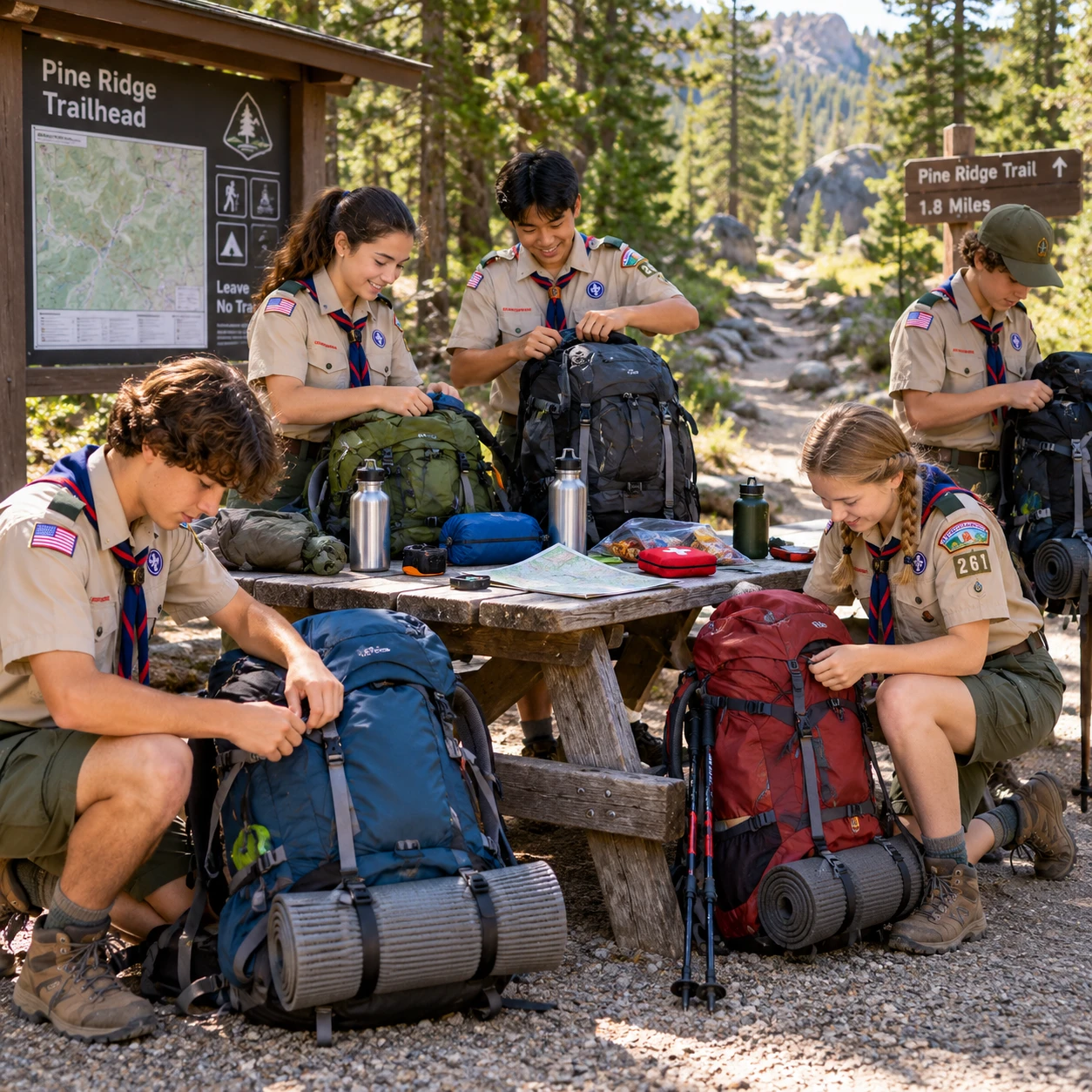
Your first overnight hike is easier to enjoy when you know the plan, pack only what you need, and work as a team. A scout troop trip is a group effort, so confirm the details with your leaders before buying gear or setting off.
Start with the Troop’s Plan and the Trail
Before packing, confirm the route, distance, forecast, meeting details, and troop instructions with your adult leaders. Those details determine what you need to carry and where the group can safely camp and refill water.
Ask for the planned start and finish times, trail distance and elevation, expected pace, campsite arrangements, and transport information. Find out whether the troop provides tents, cooking equipment, or shared safety gear. Rules can vary by location and trip, so follow the leaders’ guidance over a generic checklist.
Learn what map the group will use and how the route plan works. You should know the trail name, planned breaks, campsite, and what to do if you become separated. Keep a personal map or route notes accessible if leaders ask you to carry them, but stay with the group rather than treating the hike as a solo expedition.
Check the forecast shortly before departure and ask leaders how they will respond to rain, heat, cold, or a route change. A forecast can shift; the group’s plan should account for conditions, not just the original itinerary.
Choose the Right Gear for One Night
For one night outdoors, bring the essentials for shelter, sleep, weather protection, light, and personal safety, while checking what the troop supplies. The right kit depends on the season, route, and campsite, so avoid buying specialized equipment until you know what is required.
Use this beginner-friendly checklist as a starting point:
- Shelter and sleep: A tent or other approved shelter, sleeping bag suited to the expected conditions, and sleeping pad. Check whether these are shared troop equipment or personal items.
- Clothing: Weather-appropriate layers, including a warm layer and rain protection. Pack spare socks and sleep clothes in a dry bag or plastic liner.
- Footwear: Comfortable trail footwear with a secure fit and suitable tread. Wear it before the trip rather than testing brand-new shoes on the trail.
- Light and essentials: A headlamp or flashlight with working batteries, personal toiletries, and any medication you need. Tell the adult leader about medication and follow the troop’s plan for storing or using it.
- Safety: A small first-aid kit if assigned, plus any personal items your leader requests. The troop should clarify who carries group first-aid and emergency equipment.
Choosing a lighter kit makes uphill walking easier, but leaving out warm or rain-protective clothing can create a bigger problem than carrying a little extra. Ask your leaders to check unfamiliar gear. A sleeping bag’s comfort rating, for example, should suit the trip’s likely low temperatures, not just the daytime forecast.
Pack Food and Water Thoughtfully
Pack simple trail food for the hike and an easy dinner and breakfast, then follow the troop’s water plan. The group’s route and available treatment options determine how much water to carry and whether you can refill along the way.
Choose food that travels well, is easy to eat during breaks, and suits your needs. For trail snacks, consider items such as fruit, crackers, trail mix, or bars, while accounting for allergies and troop food rules. For camp, a familiar meal that needs little preparation is often more practical than a complicated recipe. Keep food sealed and follow leader instructions about storage, especially where wildlife may be present.
Carry a water bottle or hydration reservoir with enough capacity for the first part of the hike, as directed by your leaders. Do not assume a stream or tap will be available, clean, or open. If the plan includes refilling, ask whether the troop will provide a filter or other treatment method; untreated water can carry illness-causing organisms. Refill only at approved places and use the method the group specifies.
Pack out food scraps and wrappers. A resealable bag for rubbish makes this simple, and it prevents litter from being left at rest stops or camp.
Pack Your Backpack for Comfort
Organize your backpack so heavier items sit close to your back, frequently used items stay easy to reach, and anything that must stay dry has a protective liner. Then test the loaded pack before the trip and adjust it with a leader or experienced adult.
Start with a simple packing order:
- Bottom: Lightweight items you will not need until camp, such as sleep clothes or a sleeping bag if it fits.
- Middle, close to your back: Denser items such as food or shared equipment, packed so they do not shift.
- Top and outer pockets: Rain layer, snacks, water, map, headlamp, and other items you may need during the day.
Use a pack liner or dry bags to protect clothing and sleep gear from rain. Keep sharp or hard objects covered, and avoid attaching lots of loose items outside the backpack; they can snag on branches or throw off your balance. Pack as a troop: if tents, cooking gear, or group first aid are shared, divide them fairly and make sure everyone understands their responsibility.
Try the pack on with the clothes and footwear you will hike in. Adjust the shoulder straps and hip belt, walk around, and notice pressure points or movement. There is no single safe weight for every young hiker; body size, fitness, terrain, and local troop guidance all matter. If the pack feels too heavy, ask an adult to help remove nonessentials or redistribute shared items rather than simply pushing through discomfort.
Get Ready for the Hike and Camp
Before departure, check the forecast, prepare your clothing and footwear, and practice using your packed gear. A short test walk helps reveal rubbing straps, poor shoe fit, or hard-to-find essentials while there is still time to fix them.
Break in trail footwear gradually and bring it on a few walks before the overnight trip. Pack layers so you can add or remove clothing as conditions change. If rain is possible, keep spare clothes and your sleeping bag protected; wet sleep gear can make a night outdoors cold and uncomfortable.
Review basic trail expectations with the troop: stay with the group, follow the leader’s instructions at crossings and junctions, take breaks when directed, and speak up early if you feel unwell, cold, or develop a hot spot on your foot. Do not wait until a small problem becomes hard to manage.
At camp, set up shelter where leaders direct and keep gear organized. Check that you can reach your light and warm layer without unpacking everything. A little practice pitching the troop’s tent or using your sleeping pad at home can save time when the group arrives tired.
Hike Safely and Leave the Campsite Better
Stay with your troop, follow adult-leader guidance, and use Leave No Trace principles throughout the hike and at camp. Good preparation supports safety; good group habits protect both the hikers and the places they visit.
Walk at the group’s pace and tell a leader promptly if you need help, are falling behind, or notice a change in weather or trail conditions. Never leave the group to explore alone. Use the route plan and map as instructed, and let leaders manage decisions about navigation, emergencies, and changes to the itinerary.
Leave No Trace means minimizing your impact. Stay on established trails and designated campsites, respect wildlife, and do not damage plants or natural features. Follow local rules for fires and cooking; some areas prohibit fires altogether. Pack out rubbish, leftover food, and hygiene waste according to the troop’s instructions, and leave the campsite ready for the next visitors.
One common mistake is packing extra gear “just in case” without checking the trip plan. That can make a pack harder to carry, so ask whether an item is essential, shared, or optional. Another is assuming water will be available on the trail; confirm refill points and treatment with leaders instead. Finally, do not ignore discomfort to avoid slowing the group. Speaking up early gives the troop more options and helps everyone finish safely.
Your first overnight hike does not require a perfect kit. It requires a clear plan, suitable basics, and the willingness to communicate and help your patrol. Pack, practice, and check in with your leaders; then you can focus on the trail, the campsite, and the experience of spending a night outdoors together.